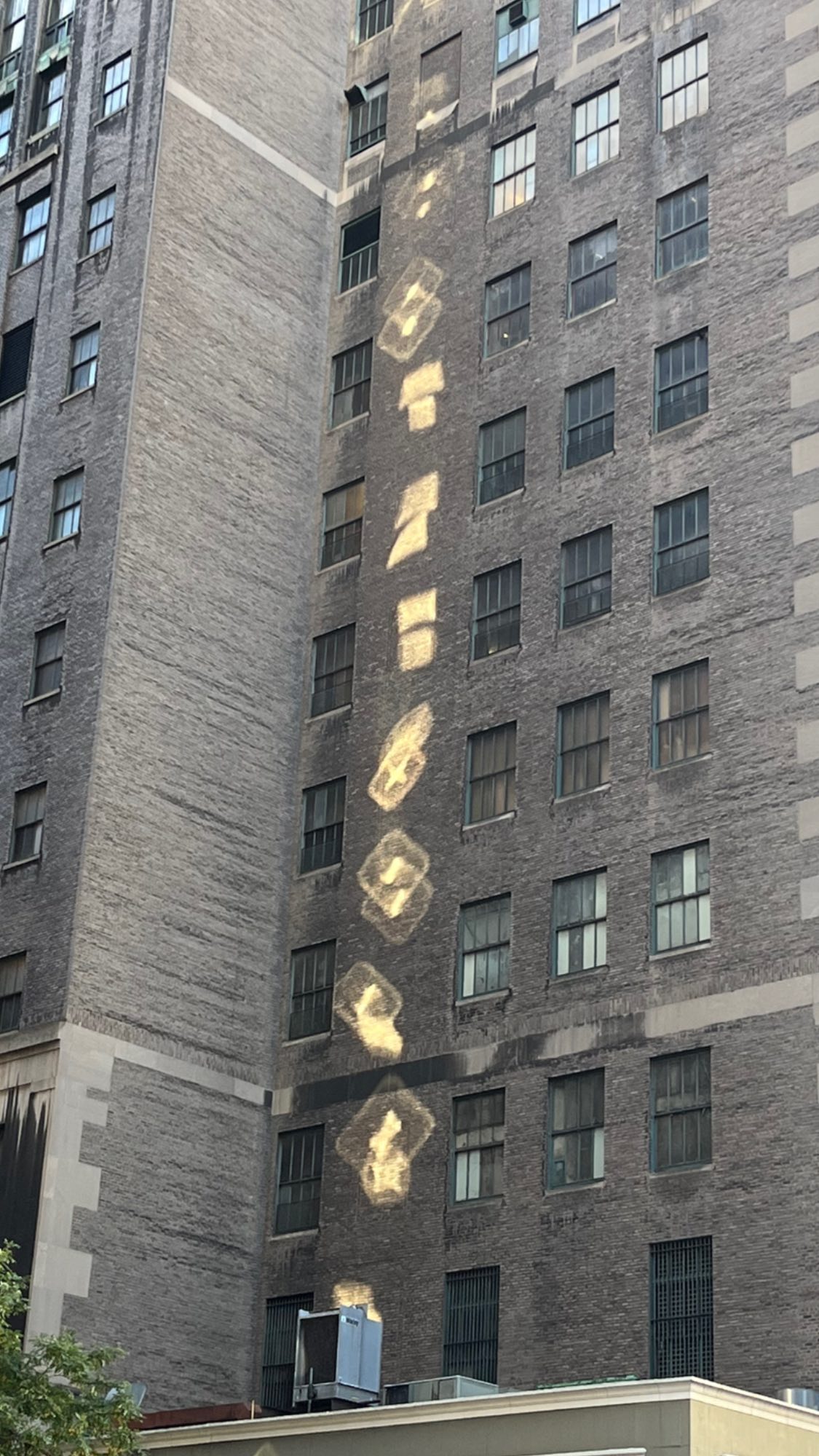
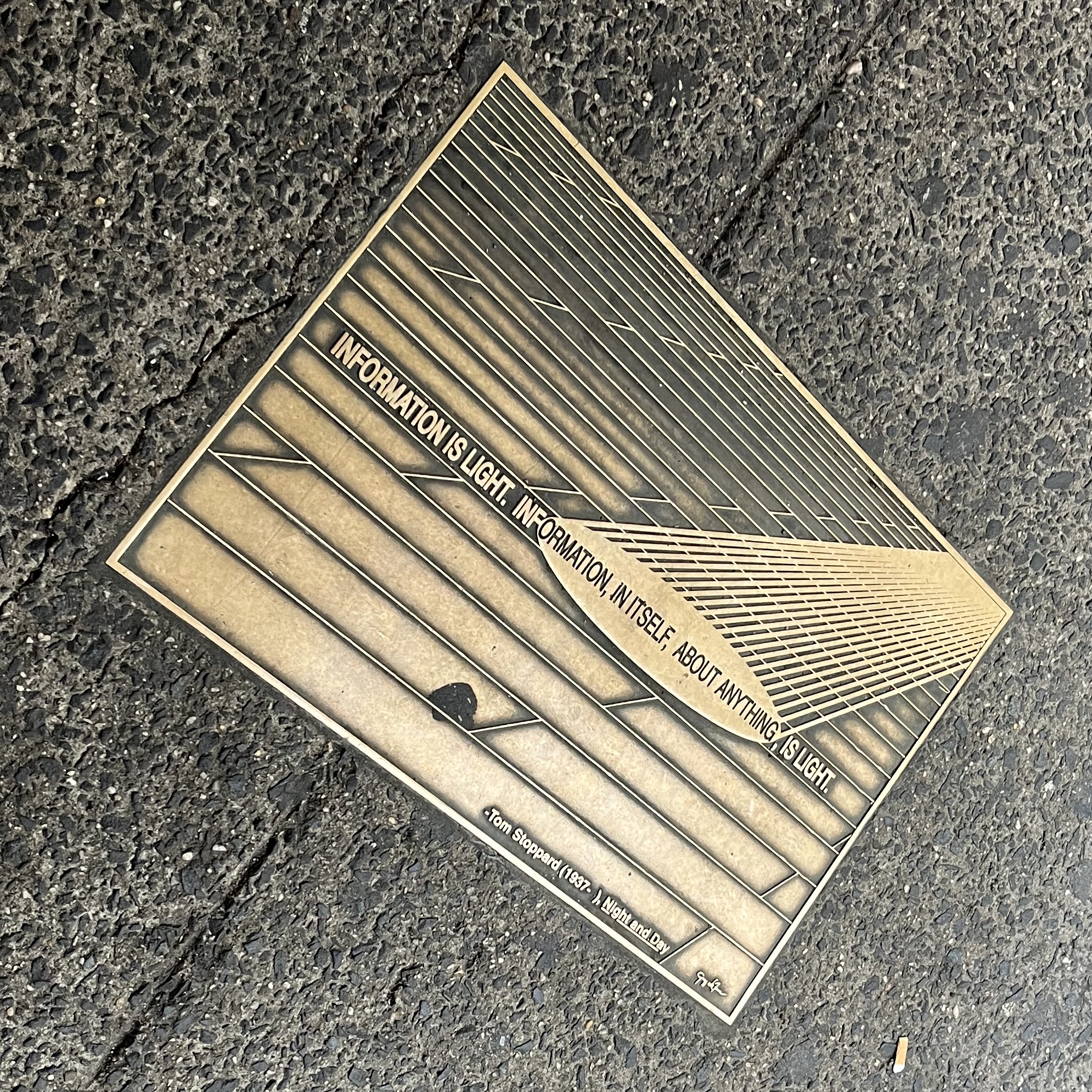
I first met Laurel Schwulst in Midtown Manhattan, of all places. On a sweltering day in late July, 2025, a group gathered on the corner of 40th Street and Fifth Avenue for the second in a series of offerings called Walking the Internet. While the sun ascended over the grid, we followed Laurel and her collaborator Alex Wolfe as they pointed out ConEdison manholes, hidden surveillance infrastructure, and spray-painted sidewalk annotations marking coils of subterranean fiber-optic cable. On 41st Street, a plaque on the ground read, “Information is light. Information, in itself, about anything, is light.” Standing beside it, Laurel spoke about how the internet is not a vague, immaterial thing, but a collection of material processes, linked by physical servers, human workers, and glass strands threaded through the earth and along the floor of the ocean.
“Most of us experience the internet through screens, browsers, and apps——layers of interface that make it feel abstract, even invisible,” Laurel and Alex wrote about the event. “How does one ‘see’ the internet?...How can exploring the internet as we can easily in the physical world——meandering, drifting, maybe losing sense of direction——bring new life into it and vice versa?”
Bringing new life to digital and in-person experiences of the world is a project that Laurel Schwulst engages with across mediums. As an artist, designer, and educator interested in “ambient forms of design and literature, public works, and the poetic potential of the world wide web,” she creates “works as living systems”——from websites, to essays, to educational experiences. Laurel has held design and creative direction roles at Are.na and The Creative Independent, among other places, and has taught design at Princeton, Yale, and through her own learning initiative: Ultralight School. Currently, she teaches at the Sam Fox School of Design and Visual Arts at Washington University in St. Louis, where she is also a Beaumont Fellow.
Laurel and I spoke recently over Zoom about the poetic web, the physicality of the internet, hosting, St.GIGA, and what it means to translate the senses.
***
Olivia Q. Pintair: How would you describe some of the tendrils that connect different aspects of your work?
Laurel Schwulst: Recently, there have been a couple of words that have been useful to me in defining my work: host and orchestrator. When I looked up orchestration——obviously it has musical connotations, but it’s also a verb that means “the bringing together of many elements surreptitiously,” in the background. There’s something about being in the background that is exciting to me. And the word host feels related. One of my favorite things about teaching is bringing in guests or inviting people to collaborate. When I started Ultralight School, the idea of it being a hosting body was most energizing. I love being inspired by the people I'm working with.
OQP: I love both of those descriptors. The word host also makes me think of the technological connotation——like a server hosting data, or hosting a website.
LS: That's a really good point. I taught design at Princeton for the past five years, and there's this café there——I guess it’s a project of the Office of Religious Life——that always offers free tea and cookies. They have this lovely motto: “Dedicated to the fine art of being open.” Hosting is similar.
OQP: So much of your work seems to center the internet as an ongoing creative process that has the potential to be so many different things. I wanted to ask you about the idea of the poetic web and what that term means to you.
LS: One day I wrote my bio for something——I think it was for my website essay in the Creative Independent, and I said I was interested in “the poetic potential of the web,” and then Chia Amisola, who has kindly cited me, at one point called it the poetic web.
I've always been curious about poetry, but growing up I didn't really like the poems that were assigned in school. It was strange that we were expected to get a specific meaning from them. My favorite poetry often happens surreptitiously, or through other mediums. My first job was working at Linked by Air, a wonderful design and technology firm, and at the time we mostly designed and built websites. Websites almost felt like a trojan horse into working poetically. I mean, we had cultural clients who were great to work with who shared some of our ideas, but in general, at least at that time, website design felt ripe for expression, maybe because it traffics in language and naming. Sometimes I think about names as "poems in the wild." Or that names have the potential to be poems.
OQP: Do you think there’s a specific point at which names become poems? What allows them to reach their poetic potential?
LS: Good question. Well, on one end something can be intended as a poetic gesture. But something can also be received poetically, regardless of intention. All websites have names, and names are compressed language, so there’s a possibility for poetics.
OQP: Totally. That feels connected to the next question I wanted to ask, which is related to the internet and materiality. I was thinking about the experience of going on the internet walk with you last year, and the difference between passively thinking about the internet as immaterial——up in a “cloud,” so to speak——versus as the physical web of matter and structure that it is. What do you think the stakes are of our perception in terms of the internet’s physicality? In other words, does it matter whether users think of it as physical or not?
LS: As the internet grows, we will more palpably notice how our physical world is affected more and more. It’s important for us humans to pay attention since we share planet Earth.
I’m interested in an ongoing kind of living. The way I want to live involves collaborating with people I respect and admire, oftentimes using the internet or technological mediums. I imagine my collaborators and I pay a lot of attention to the feeling of technology.
I've been interested in constraints. The poet Marianne Moore, in her poem about a snail, starts with “compression is the first grace of style,” which I really love. (Upon further research, she is citing the Greek philosopher Democritus in that line.) You can learn so much about what you care about if you compress something, because then you have to make choices, and art is all about choices. I feel like a lot of good could happen if we, as a society, decided on collective limits. Even if it’s not throughout broader society. Even just within schools or communities. I think we’re starting to see more and more of this sentiment manifest as backlash against the omnipresence of ubiquitous networked technology that often distracts us from what’s really important.
OQP: The way AI is often used these days feels like the opposite of compression——like what happens when choice is surrendered, or taken, in exchange for a supposedly-desireable ease or smoothness. There is a disquieting passivity that grows from the lack of compression in that case.
LS: Exactly.
OQP: You’ve been teaching a course this summer about translation and the senses in the context of writing and design. Can you talk about the course?
LS: Yes! In our class Sense to Sense, we explore translating the five senses into writing. In a sense, all writing is translation. In our write-up for the class, we talk about how we can think about translation in many ways. Even when you have an idea, you have to be a translator to express it. In this class, we're focusing on translating the five senses as a way to expand and strengthen our writing voices, and also to be present with perception.
My co-teacher, Meg Miller, is a long-term collaborator. We've both been interested in the senses from different angles. For a long time I've had this perfume review project, Perfume Area, which I do with my friend, artist Sydney Shen. We started it because we wanted to write more, and we thought that perfume was a useful vehicle. We thought of each perfume as a constraint to write a short story. Even though we frame them as reviews, we thought to ourselves, oh yeah, these are descriptions of imagined landscapes.
I’m excited about this class! We taught it last summer in-person in New York and it went really well. We had a wonderful group. It feels like a super timeless topic that’s not going to go away as long as we have bodies, and I feel like it gets to the heart of what creativity could be. Each week we talk about a different sense. We start with the most dominant sense, sight, and we show examples of different people “translating” each sense. We also look at many forms of disability and access because we can learn a lot by talking with people who have to go without it; and whose other senses are therefore heightened. For example, some people might not be able to see an image or understand an image visually. Online, there are technologies like alt-text or image descriptions——and these can be really improved by using strategies from poetry, which is explored in Alt Text as Poetry Project, a project by Finnegan Shannon and Bojana Coklyat. Anyway, I’m excited to go back to the lectures from last time we taught the class. Every year there are so many new examples. It feels like a wellspring.
OQP: That all makes me think of this one line in Água Viva by Clarice Lispector. She says: “What am I doing in writing you? Trying to photograph perfume.”
There’s something there that speaks to the futility of capturing the experience of the senses in language. But at the same time, Lispector is someone who, for me, translates so much visceral feeling through writing.
LS: Yes. I read The Passion According to G.H. The way time expands in that novel is incredible.
OQP: I wanted to ask you about time, actually. Do you feel like different spaces produce different experiences of time? How do you engage with that as a designer of digital space?
LS: I think time is very qualitative and environmental. Or that as someone working in these spaces, it’s often important to think about kairos more than chronos. For example, the website Are.na, which started in 2011, and which I joined in 2012, has been an important part of my practice. The people who run Are.na are very conscientious about their relationships to time and growth with an online community. I interviewed Cab, who co-founded Are.na, nine years ago, speaking of time passing. In the interview, I asked, do you consider Are.na a life project? Cab said yes. It feels rare for someone to say that. It's admirable to find a life project, especially in such a slippery medium as the internet. They are a big believer that community has to be cultivated slowly.
As I was mentioning earlier, artists can be especially good at describing how it feels to be in different online social spaces. Like, does it feel like it's a room with a tall ceiling, or a low ceiling? Sometimes you can have more expansive thoughts in a tall ceiling space. How does that correlate to an online space? I also think about whether I feel more or less like myself in a space, whether it's an online space or a physical space. Sometimes it's not just about the room itself, it's also the people that are coming into it. It's a collective alchemy of people, flows, and feelings that helps create a particular spacetime.
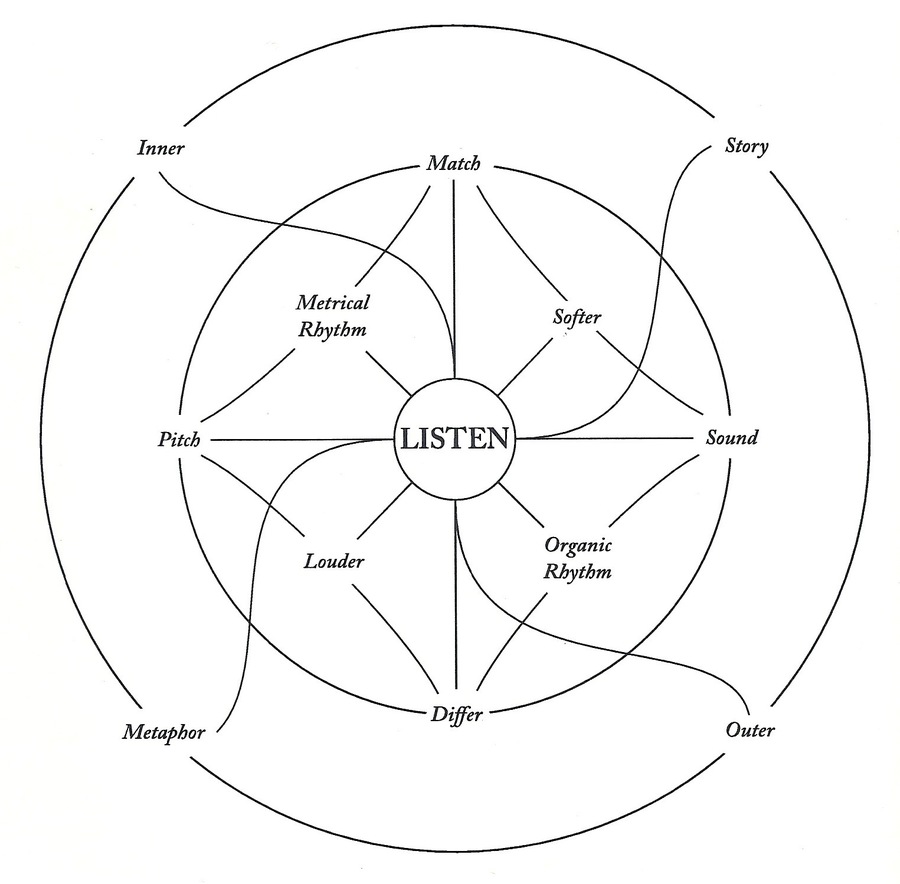
OQP: How does audio in particular relate to all of that for you?
LS: A couple years ago, I somehow became obsessed with this project of the early 90s in Japan called St.GIGA. It was the world's first satellite radio station. The creative director described it as aiming to lull people into relaxed states, like how a baby sleeps in the womb. They would combine ambient music, world music, and sounds of the earth. And then it had a fourth layer, which was that every once in a while, a poet would read their work. It is a super inspiring project, because it wasn't just a radio station or digital satellite radio station. It was a total work of art, in a sense. It also had a magazine component. They even released calendars and fragrances. It just seemed like a whole world. In the early 90s, St.GIGA had to file for bankruptcy. I think Nintendo bought it for a moment. But anyway, when I discovered this, it made me think of how these technologies have a great potential to unite us as humans, and to create states of nurturing and care.
In general, audio has this great synchronizing quality and an important spatial role as well. A few years ago, I wrote this essay about the aesthetics of white noise machines. I was interested in why they are so visually cute-looking. Basically, part of what I ended up saying is that white noise is actually the first sound that we hear as humans, in the womb. I'm really a fan of uniting the senses. Or maybe not uniting, but enlivening as many as possible.
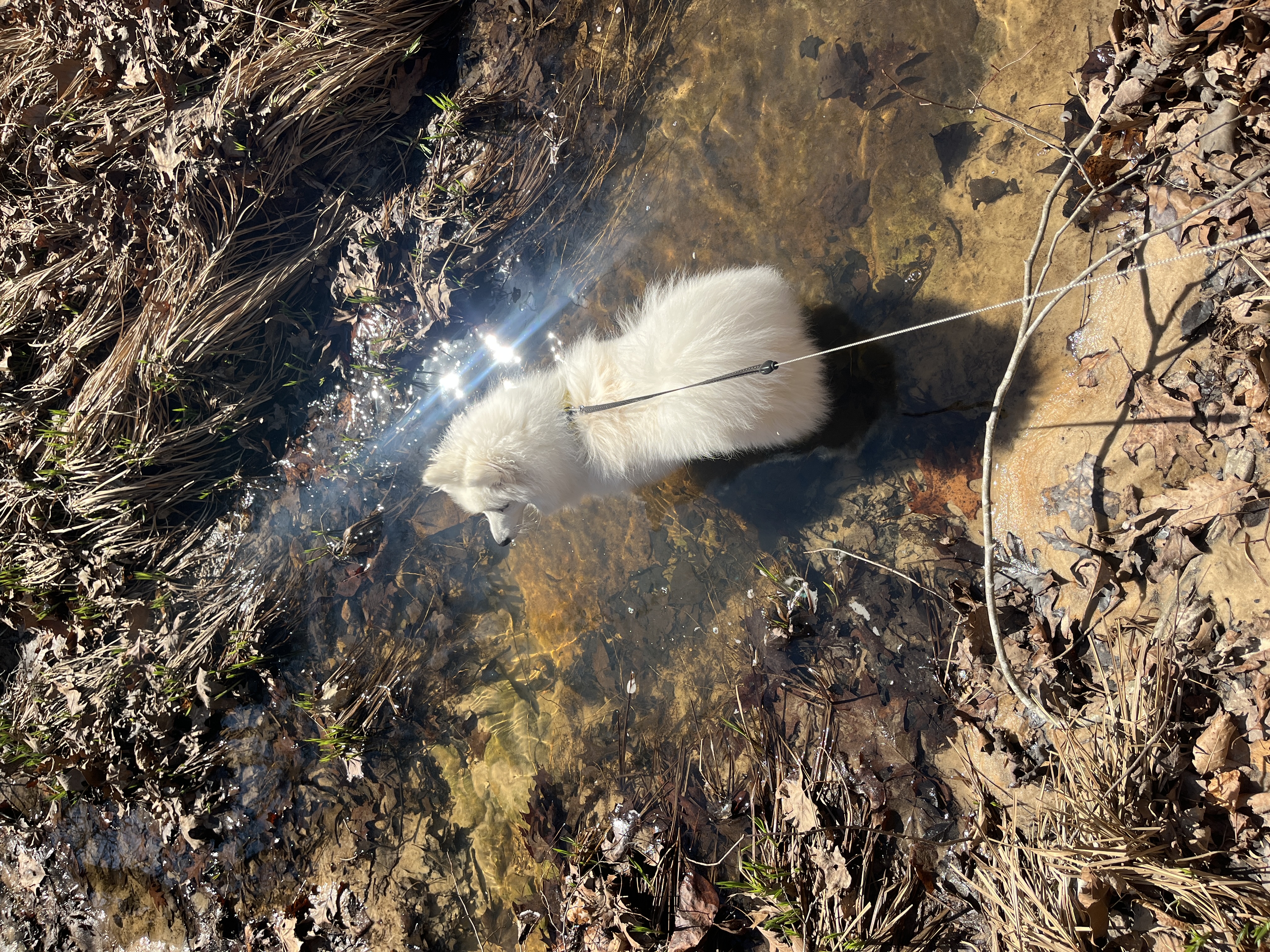
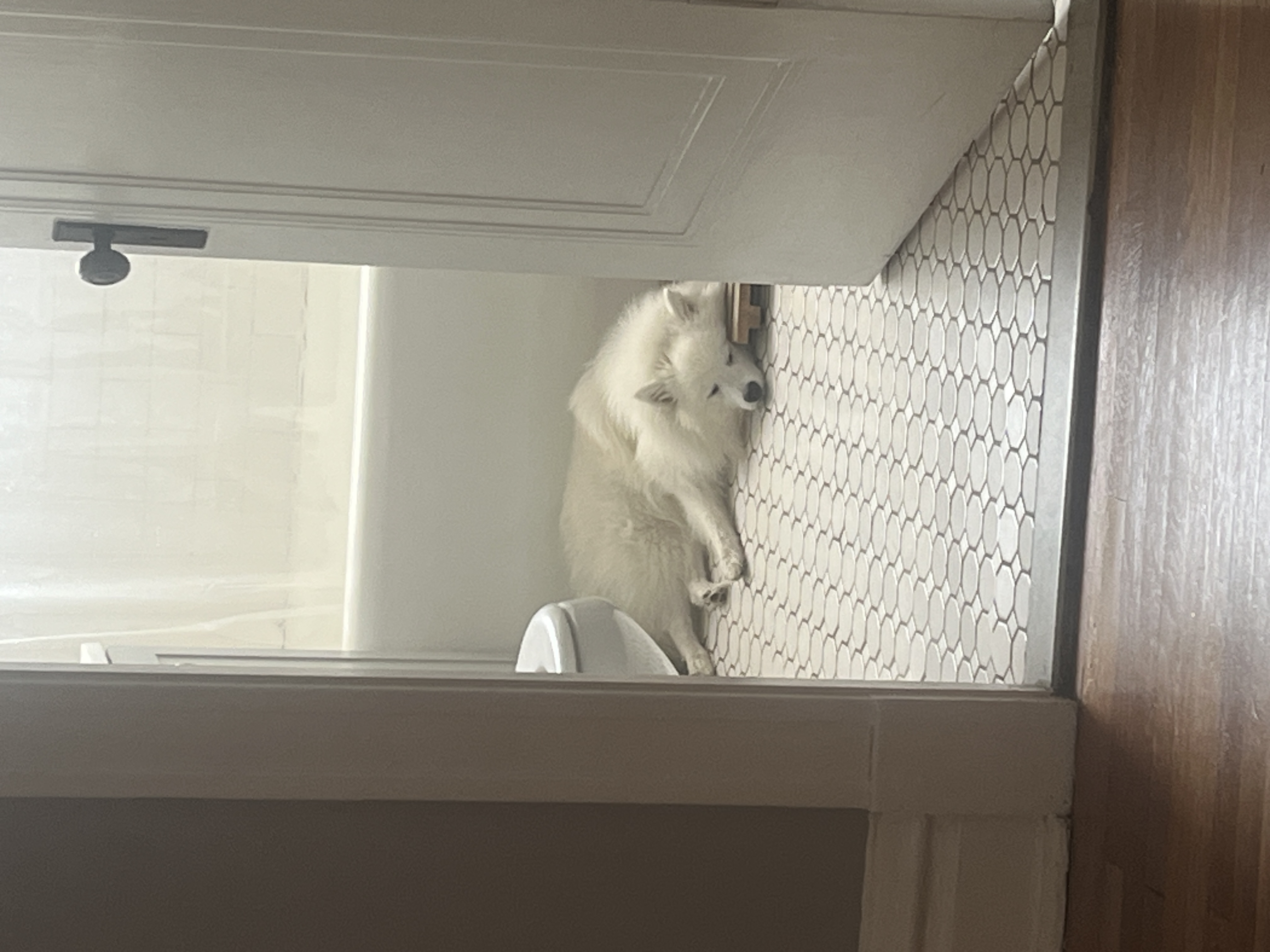
One dream sound project is to commission a six-hour or so long ambient track for my dog June, so she can feel at peace while I’m away. I was slightly shocked by how much sleepytime AI slop there is for dogs out there; so I’d love to create something special for June’s wellbeing with some musicians I admire. A while back, DJ Python made a peaceful writing mix for me; and I love returning to it when writing.
OQP: Totally. I’m thinking about how the womb is our first passage into physical, sense-based experience as humans. Maybe there is a way that audio experiences that remind us of that place can feel especially primordial, or synesthetic. Synchronizing, as you said.
LS: Yeah. I’m also thinking about the name, Lullaby Machine. Combining the word lullaby with machine is pretty potent. It reminds me of how the internet is often the last thing people look at now before they go to sleep, for better or worse, and so it has a profound effect on our personal subconscious. It can be useful to think about how we use sound to prime each other for subconscious states.
OQP: What are some of the other ways that we prime each other for those subconscious states, or could?
LS: I enjoy listening to talks and interviews with Brian Eno; he mentions how artists excel at making worlds. And they can make these worlds for people who don't have the faculties to imagine certain worlds themselves. You can kind of create new types of people, almost, if you're able to create a world as an artist. Some of the online spaces that artists have made, for example, have really changed my life. They’ve become identity-forming. I think of myself as someone who also tries to create worlds and offer them to people. To host worlds.